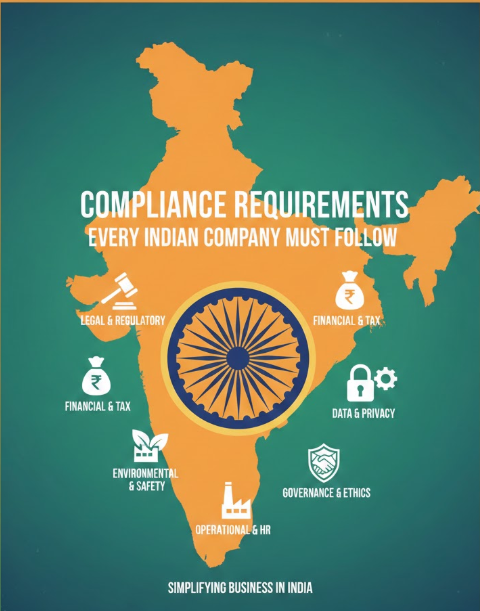
Running a company in India is not just about growth and profits; it also involves meeting various legal and regulatory obligations. Compliance helps businesses operate smoothly, avoid penalties, and build trust with stakeholders.
Every registered company must comply with the Companies Act, 2013. This includes maintaining statutory registers, conducting board meetings, holding annual general meetings (AGMs), and filing annual returns such as AOC-4 and MGT-7 with the Ministry of Corporate Affairs (MCA). Timely filing is crucial, as delays can lead to heavy fines.
Another key requirement is tax compliance. Companies must obtain PAN and TAN, file income tax returns, and comply with GST regulations if applicable. Regular GST return filing, proper invoicing, and accurate record-keeping are essential to avoid notices and audits.
Labour law compliance is equally important, especially for companies with employees. This includes compliance with PF, ESIC, Professional Tax, minimum wages, and other employment-related laws, depending on the size and nature of the business.
Additionally, companies must follow industry-specific regulations, such as trademark protection, environmental laws, and data protection norms, where applicable. Non-compliance can result in legal action and reputational damage.
Managing all these requirements can be complex, especially for growing businesses. This is where professional support becomes valuable. Tridentra assists Indian companies with end-to-end compliance management, helping them stay legally compliant while focusing on their core business goals.
Found this helpful?
Get expert assistance for your business. Our team is ready to help you implement these strategies.