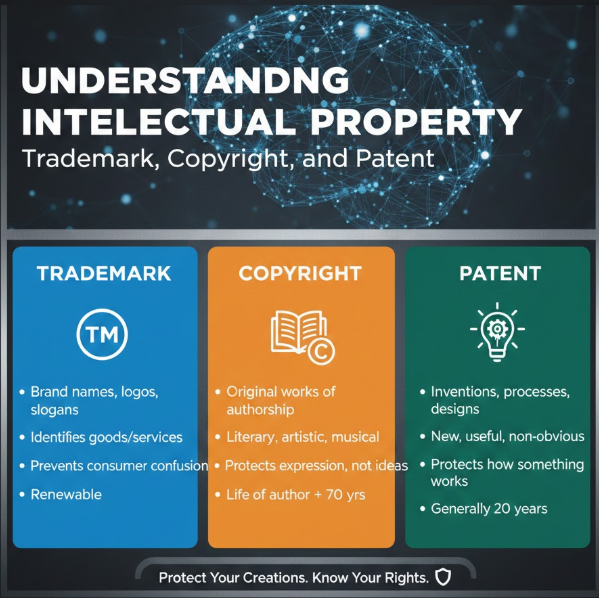
In today’s knowledge-driven economy, protecting intellectual property is essential for every business and creator. Three of the most common forms of protection are trademarks, copyrights, and patents — each serving a distinct purpose.
A trademark protects brand identity. This includes names, logos, slogans, symbols, and even distinctive packaging that helps consumers recognise the source of goods or services. Trademarks prevent others from using similar marks that could confuse customers and dilute brand value. For businesses, trademarks are vital assets that build trust and long-term recognition.
Copyright protects original creative works such as books, music, films, software, artwork, and digital content. It grants the creator exclusive rights to reproduce, distribute, and display their work. Copyright arises automatically upon creation in most countries, although registration strengthens enforcement and legal protection.
A patent safeguards inventions and technical innovations. It grants the inventor exclusive rights to make, use, or sell an invention for a limited period, typically 20 years. Patents encourage innovation by allowing inventors to commercially benefit from their ideas while disclosing technical knowledge to the public.
Understanding these differences helps businesses choose the right form of protection. At Tridentra Consulting, we assist companies in identifying, securing, and managing their intellectual property strategically — ensuring that innovation, creativity, and brand value remain fully protected in a competitive global marketplace.
Found this helpful?
Get expert assistance for your business. Our team is ready to help you implement these strategies.